

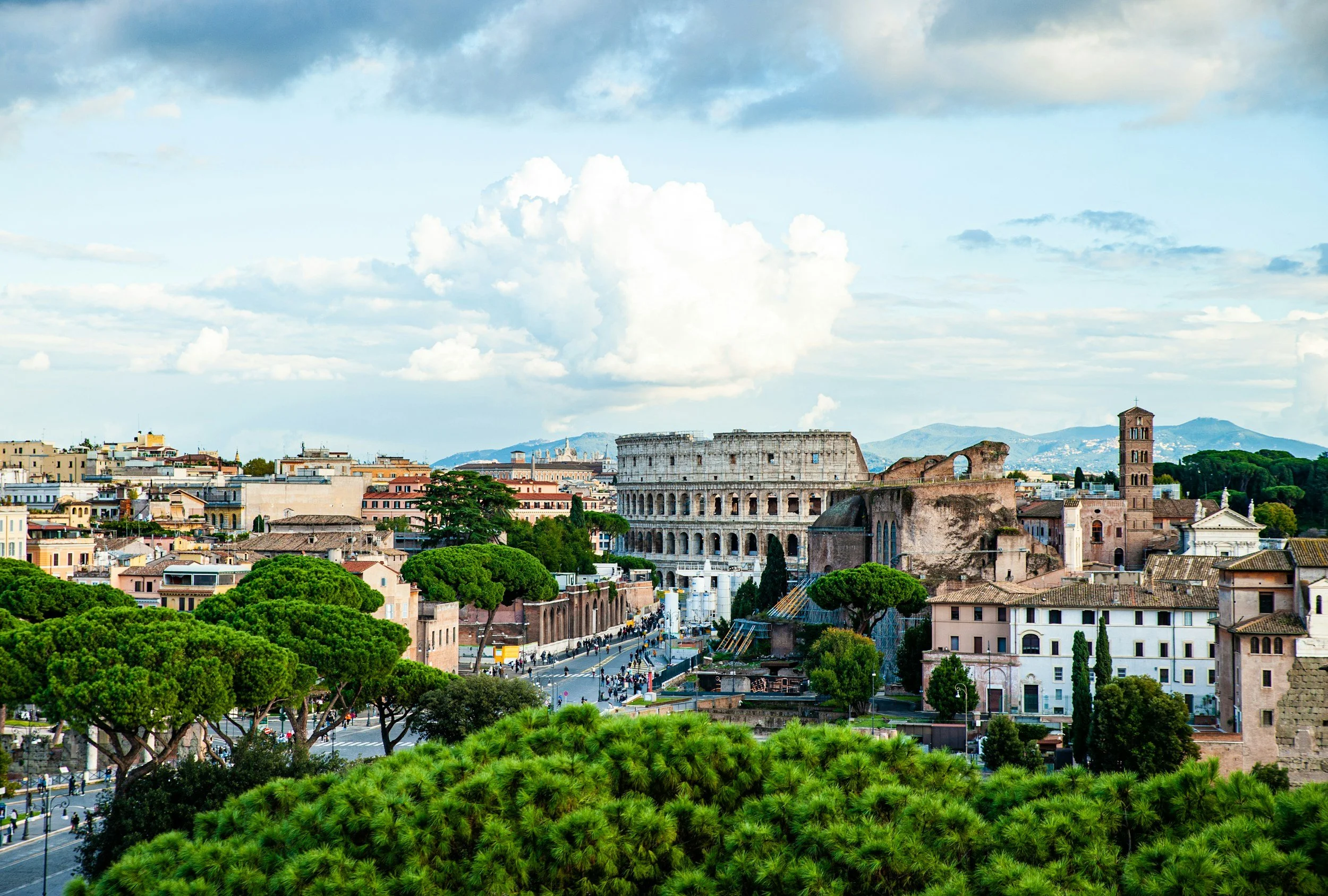
Italy
Where timeless beauty, unforgettable cuisine, and everyday moments become lifelong memories.
Last Updated: July 2026
Italy rarely feels like just another vacation.
It might begin with an espresso at a neighborhood café, a morning among the ruins of ancient Rome, or the sound of church bells carrying across a Tuscan hillside. A few days later, you could be gliding through Venice by boat, tasting wine at a family-run vineyard, or watching the Mediterranean turn gold from a terrace above the Amalfi Coast.
Italy rewards travelers who slow down. It invites long lunches, evening walks, spontaneous discoveries, and conversations that linger well beyond dessert.
Whether you are planning a honeymoon, celebrating an anniversary, traveling with family, or finally taking the European journey you have imagined for years, Italy has a remarkable way of making the experience feel deeply personal.
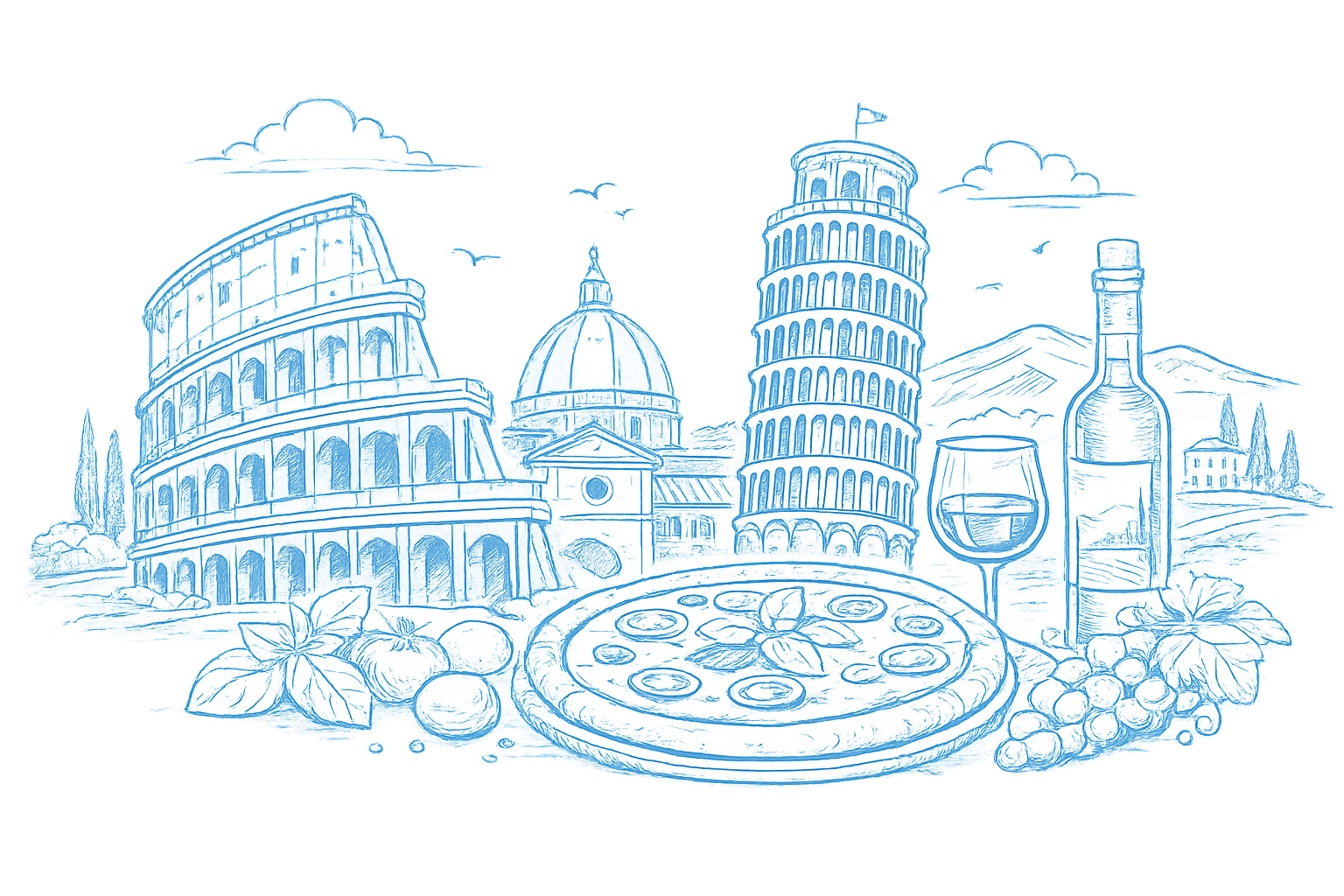
Why You’ll Love Italy
Romance That Feels Effortless
Italy does not need to try very hard to feel romantic.
Sunset over Florence, a private boat ride on Lake Como, dinner beneath the lemon trees in Sorrento, or simply getting lost together in a quiet Venetian neighborhood can feel more memorable than anything carefully staged.
That natural sense of romance is one reason Italy remains one of the world’s most popular honeymoon destinations.
Food That Changes from Region to Region
There is no single Italian cuisine.
Roman carbonara tastes different from pasta in Bologna. Neapolitan pizza belongs to Naples. Liguria is known for pesto, Piedmont for truffles, Sicily for citrus and seafood, and Emilia-Romagna for some of the country’s most celebrated culinary traditions.
The joy is not simply eating well. It is discovering how strongly each dish is connected to its region.
History Around Nearly Every Corner
Ancient ruins, Renaissance masterpieces, medieval villages, grand cathedrals, and historic palaces are woven into everyday life.
In Italy, history is not always behind museum glass. It may be beneath your hotel, beside your lunch table, or visible from the window of your train.
Extraordinary Art and Architecture
Italy is home to some of the world’s most influential art, architecture, and design.
Rome, Florence, Venice, Milan, Naples, and smaller cities throughout the country contain museums, churches, galleries, and public spaces that could fill an entire vacation on their own.
Landscapes with Remarkable Variety
The snow-covered Dolomites, rolling hills of Tuscany, cliffs of the Amalfi Coast, beaches of Sardinia, vineyards of Piedmont, lakes of Lombardy, and volcanic landscapes of Sicily can feel like entirely different countries.
Italy may be compact compared with the United States, but its landscapes and identities change quickly.
Travel That Can Be Both Polished and Personal
Italy offers grand hotels, historic palaces, private villas, luxury trains, celebrated restaurants, and exclusive experiences.
It also offers family-run inns, neighborhood trattorias, morning markets, village festivals, and tiny cafés where the best part of the day may be something you never planned.
-
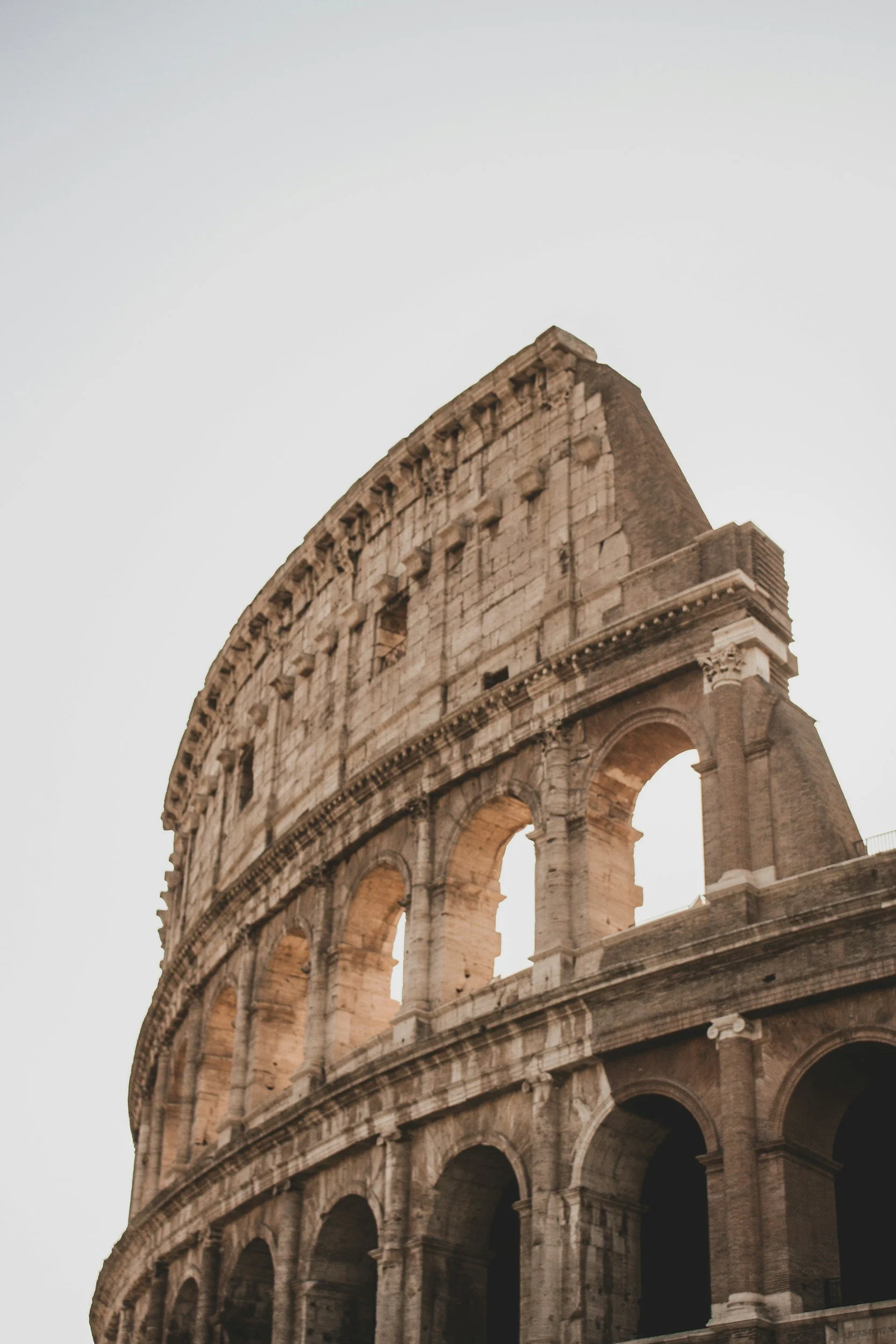
Rome can feel grand, chaotic, theatrical, and completely irresistible.
Ancient ruins sit beside busy streets. Baroque fountains appear unexpectedly between apartment buildings. Neighborhood cafés and evening piazzas give the city a rhythm that feels more intimate than its monuments suggest.
Highlights
The Colosseum and Roman Forum
The Vatican Museums and St. Peter’s Basilica
The Pantheon
Trevi Fountain
Piazza Navona
Trastevere
Borghese Gallery and Gardens
Tivoli and its historic villas
Castelli Romani wine country
Perfect For:
First-time visitors, history lovers, food travelers, families, honeymooners, and travelers beginning or ending a Mediterranean cruise.
Nifty Ducks Note
Rome becomes much more rewarding when you stop trying to conquer it. Build each day around one major area, leave room for lunch, and expect that walking between the highlights will reveal some of the city’s best moments.
-
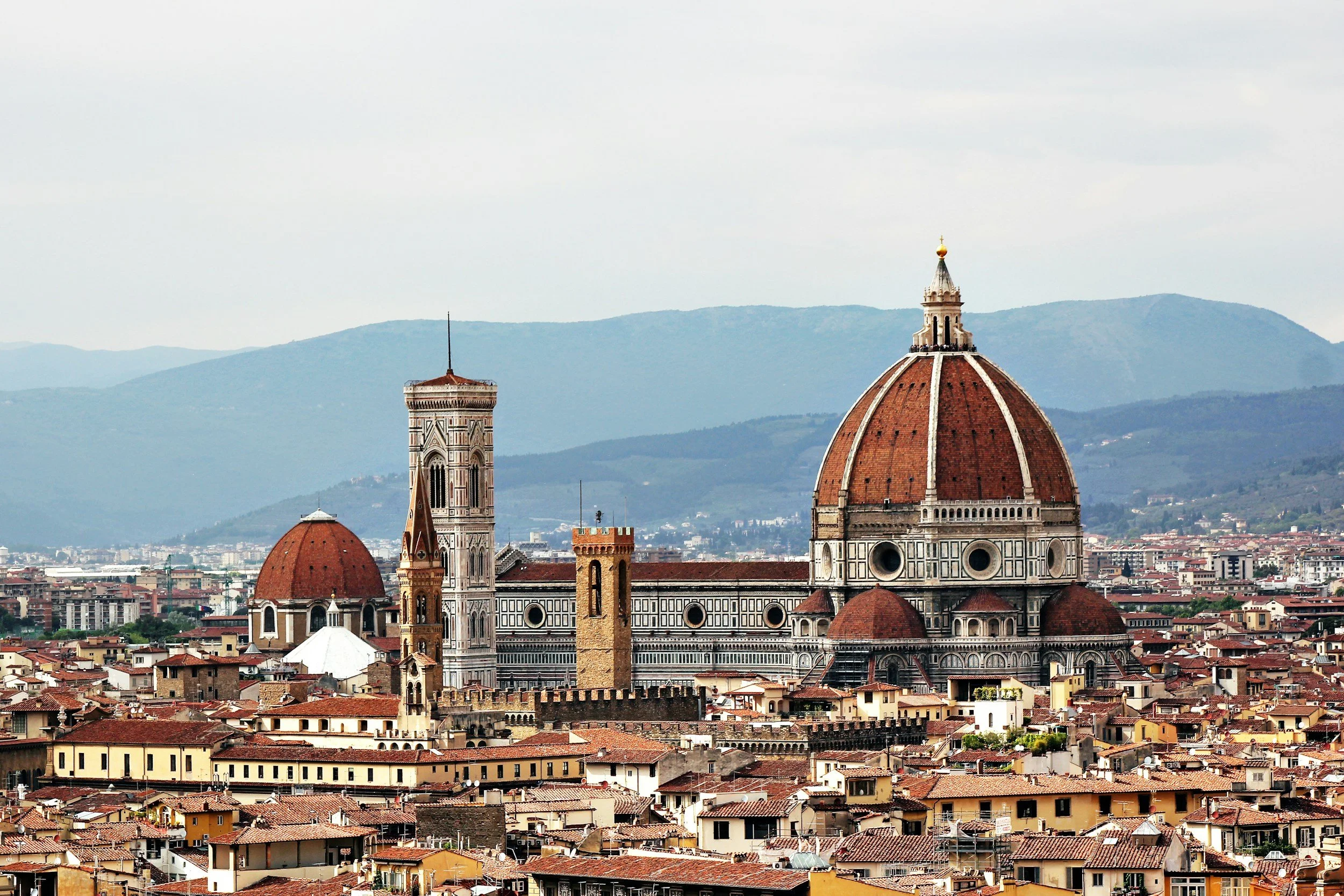
Florence is the artistic heart of Renaissance Italy, while the surrounding Tuscan countryside offers vineyards, hill towns, historic villas, and landscapes that seem designed for slow travel.
Together, they create one of Italy’s strongest combinations of culture, food, romance, and scenery.
Highlights
Florence Cathedral and Brunelleschi’s Dome
Uffizi Gallery
Accademia Gallery
Ponte Vecchio
Oltrarno
Chianti
Siena
San Gimignano
Val d’Orcia
Montepulciano
Montalcino
Lucca and Pisa
Perfect For:
Honeymoons, anniversaries, food and wine travel, art lovers, villa stays, road trips, and travelers seeking a slower pace.
Nifty Ducks Note
Florence and Tuscany should not be treated as the same experience. Florence is best explored on foot, while the countryside becomes more rewarding with a driver, rental car, or thoughtfully planned private touring.
-
Venice is one of the rare destinations that looks familiar before you arrive and still manages to feel astonishing in person.
Beyond St. Mark’s Square, the city is a maze of quiet canals, artisan workshops, neighborhood wine bars, hidden courtyards, and residential islands.
Highlights
St. Mark’s Basilica
Doge’s Palace
Grand Canal
Rialto Market
Dorsoduro
Cannaregio
Murano
Burano
Torcello
Verona
Prosecco wine country
The Venetian Dolomites
Perfect For:
Honeymooners, art lovers, photographers, cruise travelers, luxury travelers, and anyone who enjoys exploring without a rigid plan.
Nifty Ducks Note
Venice is most magical early in the morning and after day-trippers leave. Staying in the city for at least two or three nights gives you an entirely different experience than visiting for a few crowded hours.
-
Milan is Italy’s center of fashion, finance, contemporary design, and modern urban energy.
Nearby Lake Como offers a dramatic contrast: elegant villas, mountain scenery, waterfront villages, and classic Italian glamour.
Highlights
Milan Cathedral
Galleria Vittorio Emanuele II
Leonardo da Vinci’s The Last Supper
Brera
Navigli
Lake Como
Bellagio
Varenna
Menaggio
Bergamo
Franciacorta wine region
Perfect For:
Luxury travel, fashion and design, city breaks, honeymoons, milestone celebrations, shopping, and travelers combining Italy with Switzerland.
Nifty Ducks Note
Lake Como deserves more than a rushed day trip from Milan. Staying on the lake allows you to enjoy the quieter mornings and evenings that give the destination its real sense of place.
-
Emilia-Romagna is one of Italy’s most rewarding regions for travelers who plan their trips around food.
Bologna provides medieval architecture, covered porticoes, lively markets, and an energetic university atmosphere. Parma, Modena, and the surrounding countryside reveal the traditions behind some of Italy’s most famous ingredients.
Highlights
Bologna’s historic center
Piazza Maggiore
Quadrilatero market
Parma
Modena
Ravenna’s Byzantine mosaics
Parmigiano Reggiano producers
Traditional balsamic vinegar estates
Prosciutto di Parma
Motor Valley
Perfect For:
Food lovers, culinary travelers, repeat visitors to Italy, automotive enthusiasts, and travelers seeking a less hurried city experience.
Nifty Ducks Note
This is one of Italy’s best regions for private food experiences because the stories behind the ingredients are every bit as satisfying as the tastings.
-
Southern Italy feels more intense, expressive, and wonderfully alive.
Naples offers historic streets, archaeological treasures, and one of the country’s most distinctive culinary traditions. Nearby Pompeii and Herculaneum reveal the scale of the ancient Roman world, while the Amalfi Coast delivers dramatic cliffs, pastel-colored villages, and Mediterranean views.
Highlights
Naples Historic Center
Naples Archaeological Museum
Pompeii
Herculaneum
Mount Vesuvius
Sorrento
Positano
Amalfi
Ravello
Capri
Ischia
Procida
Perfect For:
Honeymoons, food lovers, coastal travel, history, boat experiences, anniversaries, and travelers who enjoy vibrant destinations.
Nifty Ducks Note
The Amalfi Coast is beautiful, but moving around can be slow and crowded. The right hotel location matters enormously. A spectacular view is lovely; a spectacular view that requires hundreds of steps every time you leave the hotel is a different vacation entirely.
-
Liguria combines colorful seaside villages, forested hills, elegant coastal towns, and the culinary traditions of pesto, focaccia, and fresh seafood.
The Cinque Terre receives most of the attention, but nearby Portofino, Santa Margherita Ligure, Camogli, and Genoa deserve consideration.
Highlights
Monterosso al Mare
Vernazza
Corniglia
Manarola
Riomaggiore
Portofino
Santa Margherita Ligure
Camogli
Genoa
San Fruttuoso
Perfect For:
Hikers, coastal travelers, photographers, couples, active travelers, and repeat visitors.
Nifty Ducks Note
Cinque Terre is not always the peaceful seaside escape photographs suggest. It can be very crowded, especially during the day. Staying overnight or choosing another Ligurian town as a base can create a more relaxed experience.
-
Puglia offers olive groves, whitewashed towns, Adriatic beaches, masseria stays, and a slower rhythm that feels refreshingly different from Italy’s busiest destinations.
Nearby Basilicata is home to Matera, one of the country’s most atmospheric historic cities.
Highlights
Bari
Polignano a Mare
Monopoli
Alberobello
Ostuni
Lecce
Valle d’Itria
Salento
Gargano Peninsula
Matera
Perfect For:
Honeymooners, road trips, beach vacations, food lovers, boutique hotels, and travelers seeking a less conventional Italy itinerary.
Nifty Ducks Note
Puglia is ideal for travelers who want to slow down, but a car or private driver often makes the region far easier to experience.
-
Sicily feels like a destination within a destination.
Greek temples, Norman cathedrals, Baroque cities, active volcanoes, beaches, vineyards, markets, and deeply regional food traditions reflect centuries of cultural influence.
Highlights
Palermo
Taormina
Mount Etna
Syracuse and Ortigia
Noto
Ragusa
Modica
Agrigento
Cefalù
Aeolian Islands
Val di Noto
Perfect For:
History, food, wine, beaches, road trips, honeymoons, archaeology, and travelers who want a more complex view of Italy.
Nifty Ducks Note
Sicily is larger than many travelers expect. It is usually better to focus on one side of the island than attempt to circle the entire island in a short visit.
-
Sardinia is known for brilliant blue water, dramatic coastlines, secluded coves, archaeological sites, and a culture that feels distinctly separate from mainland Italy.
The glamorous Costa Smeralda receives much of the attention, but the island also offers rugged interiors and quieter coastal communities.
Highlights
Costa Smeralda
La Maddalena Archipelago
Cagliari
Alghero
Gulf of Orosei
Supramonte
Nuragic archaeological sites
Southern Sardinia’s beaches
Perfect For:
Beach vacations, luxury resorts, yacht travel, honeymoons, active travelers, and island escapes.
Nifty Ducks Note
Sardinia is not simply an Italian beach add-on. Its size and geography reward travelers who choose one primary region and give it enough time.
-
Piedmont offers elegant cities, celebrated wines, white truffles, historic estates, and mountain scenery.
Turin brings grand architecture, cafés, museums, and a refined atmosphere, while the Langhe and Monferrato regions are ideal for wine-focused travel.
Highlights
Turin
Barolo
Barbaresco
Alba
Langhe
Lake Maggiore
Italian Alpine resorts
Historic royal residences
Perfect For:
Wine lovers, autumn travel, gastronomy, luxury countryside stays, skiing, and repeat visitors.
Nifty Ducks Note
Piedmont is one of Italy’s best choices for travelers who love Tuscany’s food-and-wine appeal but want something quieter and less expected.
-
The Dolomites deliver some of Europe’s most dramatic mountain scenery.
The region blends Italian and Alpine cultures, with hiking, skiing, wellness hotels, scenic drives, and cuisine influenced by neighboring Austria.
Highlights
Cortina d’Ampezzo
Val Gardena
Alta Badia
Alpe di Siusi
Tre Cime di Lavaredo
Lake Braies
South Tyrol
Bolzano
Merano
Perfect For:
Hiking, skiing, wellness, active honeymoons, scenic road trips, and travelers who prefer mountain landscapes to beaches.
Nifty Ducks Note
The Dolomites can be surprisingly romantic. A few days in a mountain retreat can provide the perfect slower chapter after busy sightseeing in Venice or Florence.
Explore Italy’s Regions
Perfect For:
Honeymoons
Anniversary Trips
First-Time European Travelers
Food and Wine Lovers
Art and History Enthusiasts
Luxury Escapes
Family Vacations
Multi-Generational Travel
LGBTQ+ Travelers
Rail Journeys
Mediterranean Cruises
Slow Travel
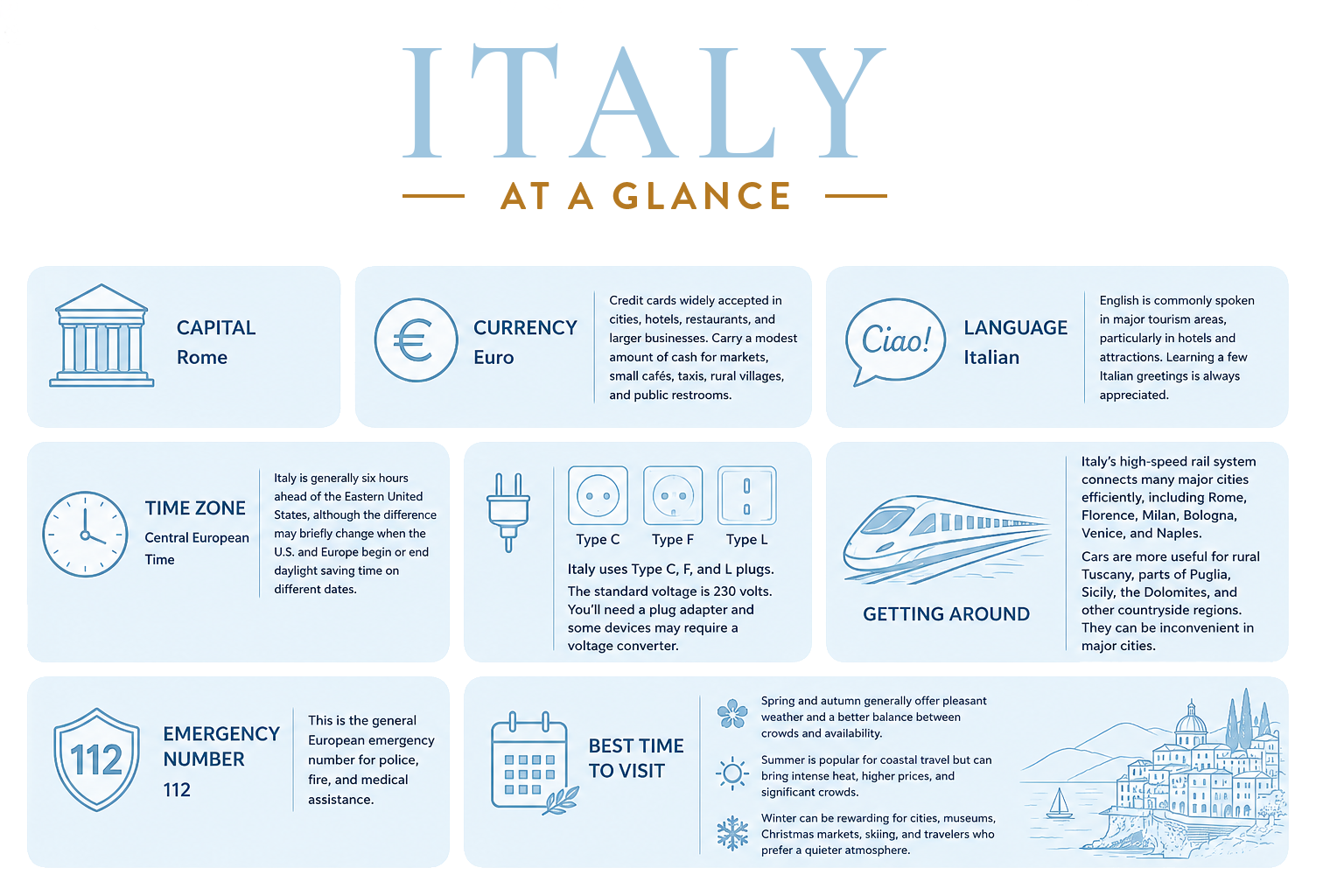
Honeymoons in Italy
Italy gives honeymooners unusual flexibility.
A trip can combine art, history, beaches, wine, luxury hotels, countryside retreats, and relaxed coastal time without requiring multiple countries.
Best Italian Honeymoon Combinations
-
Rome, Florence, and Venice
Ideal for couples who want Italy’s essential art, history, food, and romance.
-
Rome, Florence, and the Amalfi Coast
A strong balance of sightseeing, culture, and relaxation.
-
Florence, Tuscany, and Lake Como
Perfect for wine, villas, countryside, and refined lakefront luxury.
-
Naples, the Amalfi Coast, and Puglia
Best for couples who want food, coastlines, boutique stays, and a more leisurely pace.
-
Sicily or Sardinia
Ideal for couples who want beaches, food, history, and fewer hotel changes.
-
Venice and the Dolomites
A beautiful blend of culture, scenery, hiking, wellness, and quiet luxury.
Honeymoon Planning Advice
A honeymoon should not feel like an endurance test.
Three or four thoughtfully chosen destinations usually create a better experience than trying to collect every major Italian city in one trip. Build in at least one slower stay with no pressure to sightsee from morning until night.
The most romantic moments are often the ones that never appear on an itinerary.
Inclusive Travel in Italy
Italy welcomes millions of visitors each year from a wide range of cultures, identities, backgrounds, and family structures.
Experiences can vary by destination. Larger cities and major tourist regions generally feel more internationally minded, while smaller, more traditional communities may be less visibly diverse.
Thoughtful planning can help match each traveler with destinations, hotels, transportation, and experiences that make them feel comfortable and supported.
-
Italy recognizes same-sex civil unions, which became legal in 2016, but it does not currently perform same-sex marriages. Same-sex couples therefore have fewer family and adoption rights than married opposite-sex couples under Italian domestic law.
For visitors, the tourism experience is generally more welcoming than the legal framework might suggest. Rome, Milan, Bologna, Florence, Naples, Turin, and parts of Puglia and Sicily have visible LGBTQ+ communities and events.
Most same-sex couples travel without significant difficulty in established tourism areas. Public affection may attract more attention in conservative towns than in major cities, so travelers should use the same situational awareness they would elsewhere.
Hotels accustomed to international travelers are unlikely to question a shared bed or treat a same-sex couple unusually.
Nifty Ducks Perspective
Italy is not usually a destination where LGBTQ+ travelers need to hide who they are. However, it should not be described as having the same legal equality or consistently open social environment found in countries such as Spain, Portugal, Malta, or the Netherlands.
For most vacationers, the practical tourism experience is comfortable. For LGBTQ+ families or travelers dealing with legal documentation, parental recognition, or medical decisions, additional preparation may be worthwhile.
-
Italy is gradually improving accessibility at museums, archaeological areas, transportation hubs, and major visitor attractions. Recent initiatives include tactile exhibits, Braille signage, audio resources, and improved accessible routes at destinations such as Pompeii and museums in Florence and Rome.
Historic architecture remains a real challenge.
Cobblestones, bridges, stairs, narrow elevators, uneven terrain at archaeological sites, and older hotel buildings can pose obstacles for travelers who use wheelchairs or have limited mobility.
Planning Considerations
Confirm elevator dimensions rather than accepting a general statement that a hotel has an elevator.
Request room measurements and bathroom photographs when accessibility is essential.
Arrange accessible transfers in advance.
Verify museum entrances and reserved accessible routes.
Consider private touring when public transportation or group walking tours may be difficult.
Choose hotel locations that minimize hills, bridges, and long walking distances.
Avoid assuming that an “accessible room” follows the same specifications used in the United States.
Nifty Ducks Perspective
Italy can absolutely be experienced by travelers with disabilities, but successful planning depends on specific details. “Accessible” is not enough information. The better question is: accessible for whom, and in what way?
-
Italy is exceptionally family-friendly.
Children are generally welcomed in restaurants, piazzas, hotels, and public spaces. Italians tend to value family life, and multi-generational groups are a familiar sight.
Family-Friendly Experiences
Gladiator and ancient Rome tours
Pizza and pasta-making classes
Gelato tastings
Boat rides
Farm stays
Castle visits
Beach vacations
Interactive museums
Food markets
Train journeys
Archaeological sites
Family-friendly cycling
Italy works especially well when children are given experiences rather than a nonstop schedule of museums and churches.
Nifty Ducks Perspective
The country is welcoming to families, but Italy still requires walking. Choosing a centrally located hotel and limiting the number of scheduled attractions can improve the trip for every generation.
-
Italy is a popular choice for solo travelers because of its rail connections, walkable city centers, tours, cafés, and abundance of cultural experiences.
Dining alone is generally comfortable, especially at cafés, wine bars, trattorias, and restaurant counters.
Travelers should remain alert to pickpocketing in busy stations, on public transportation, at crowded attractions, and in major tourist areas.
Solo travelers may find smaller group tours, cooking classes, food walks, and day trips especially useful for adding social interaction without sacrificing independence.
-
Italy’s major cities and tourism destinations welcome visitors from around the world, but travelers of color may occasionally experience staring, insensitive comments, profiling, or behavior that feels different from what white travelers encounter.
Experiences vary widely and should not be generalized across the entire country. Most visits are positive, but it is important not to dismiss the possibility of bias.
International hotels, established tour operators, and cosmopolitan cities often provide the most consistently comfortable experience.
Nifty Ducks Perspective
Inclusive planning means discussing real possibilities without turning them into predictions. A traveler’s experience may be entirely welcoming, but knowing that regional attitudes can vary allows us to make more thoughtful choices about accommodations, guides, nightlife, and transportation.
-
Italy can accommodate a wide range of travelers, but advance planning makes a noticeable difference.
Vegetarian dining options are widely available, although menus may not always clearly label dishes. Vegan, halal, kosher, gluten-free, and allergy-sensitive dining options are easiest to find in major cities.
Travelers with severe food allergies should carry translated allergy cards and clearly communicate concerns before ordering.
Visitors entering churches and religious sites should dress respectfully. Some locations require shoulders and knees to be covered.
Luxury Italy
Italian luxury is not always about extravagance.
It may be a palace hotel where frescoes remain above the bed, a vineyard lunch hosted by the family that owns the estate, a private museum visit before opening, or a boat waiting at the hotel dock when you are ready rather than when the timetable says you should leave.
Signature Luxury Experiences
Private after-hours museum tours
Historic palace hotels
Tuscan villa stays
Lake Como boat charters
Amalfi Coast yacht days
Private Vatican access
Fashion experiences in Milan
Michelin-starred dining
Vineyard visits and blending experiences
Chauffeured countryside touring
Luxury trains
Helicopter transfers
Private island excursions
Exclusive cooking experiences
Preferred Partner Benefits
At select luxury hotels, booking through preferred partner programs may include benefits such as:
Daily breakfast for two
Hotel or resort credits
Room upgrades when available
Early check-in when available
Late checkout when available
Additional welcome amenities
The rate may look similar to booking directly, but the added value and advisor support can make the experience significantly better.
Italy by Cruise
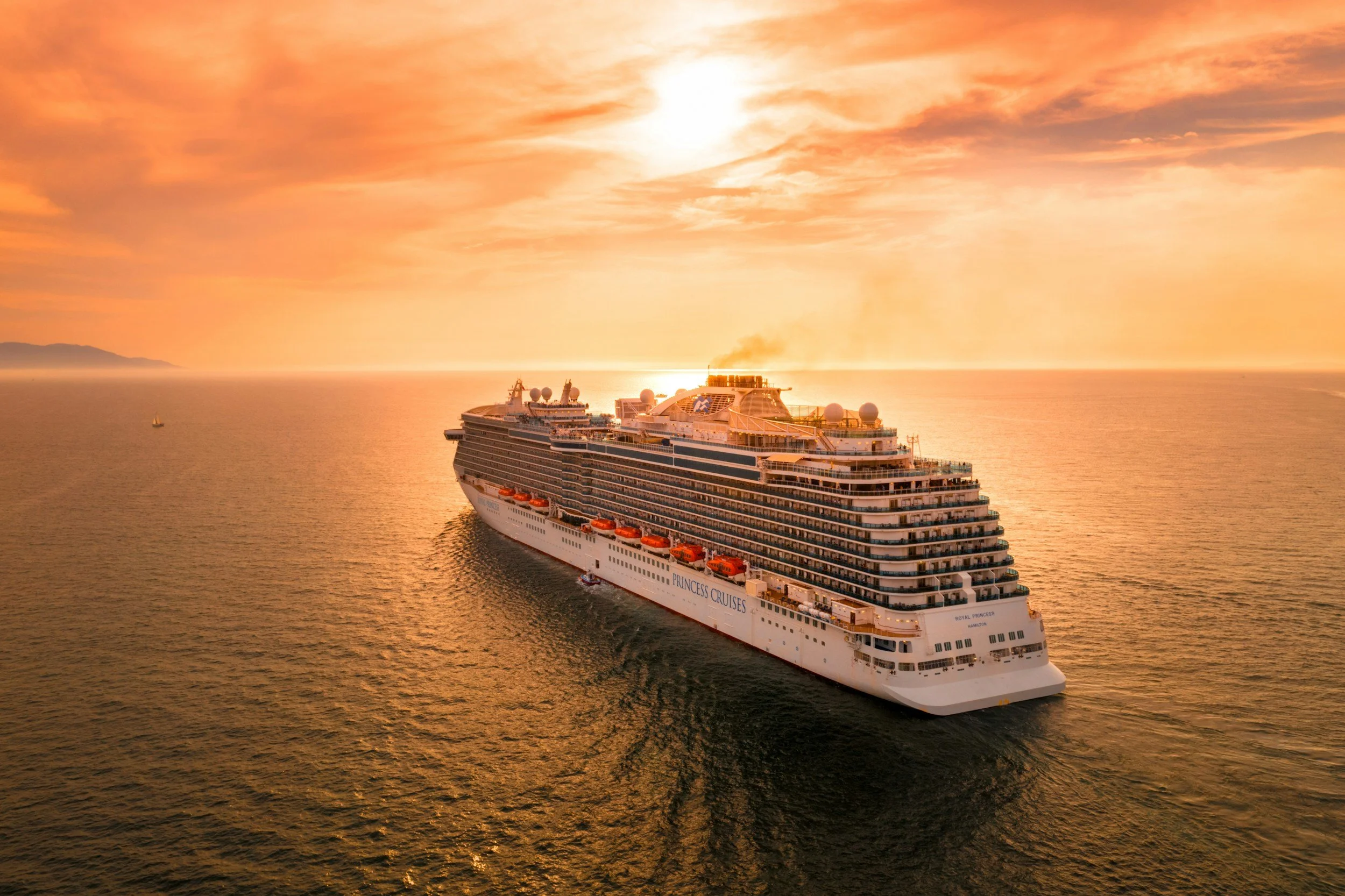
Italy is one of the Mediterranean’s most important cruise destinations.
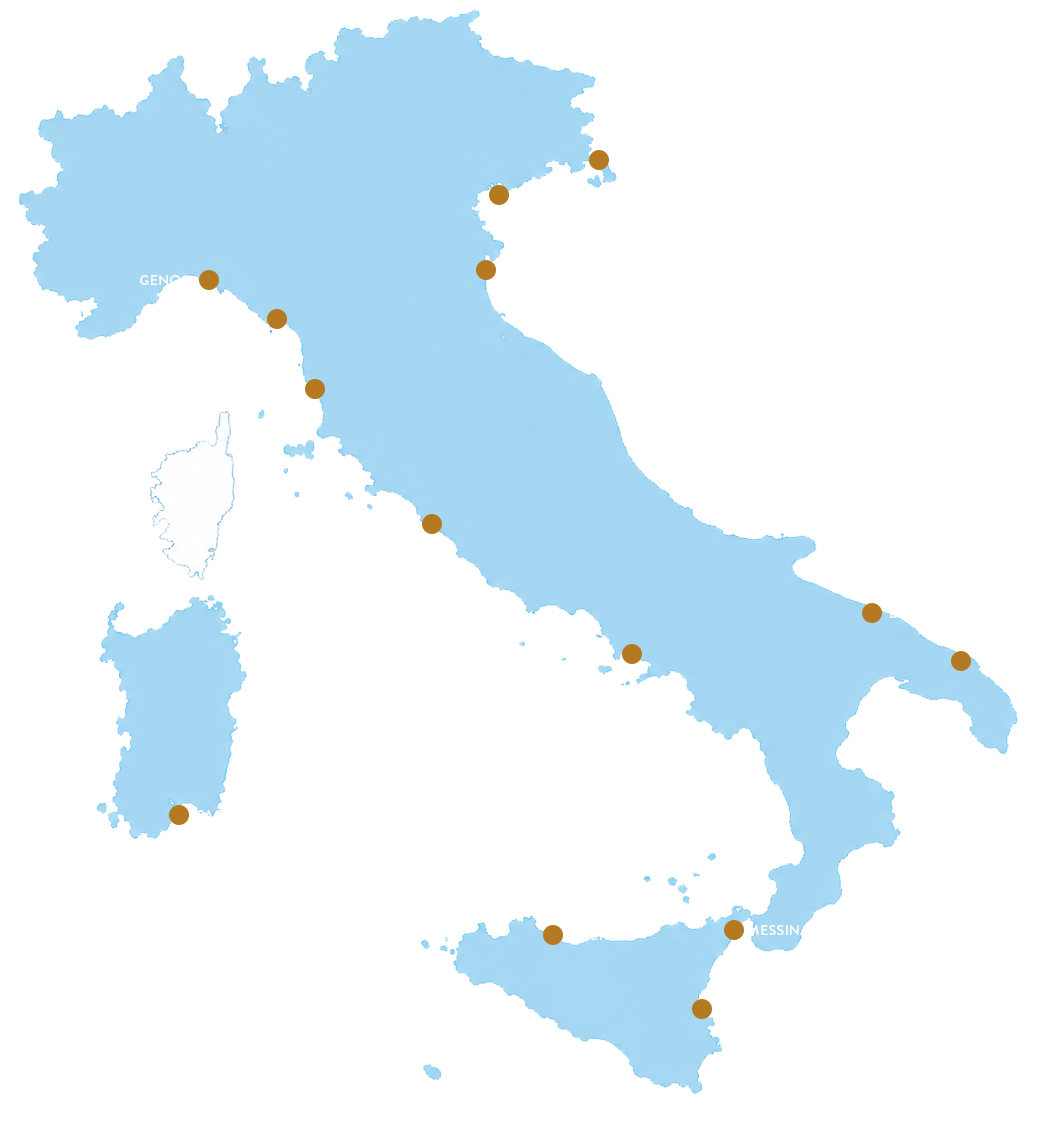
Cruises can provide a useful introduction, but ports are not always close to the cities named on the itinerary. “Rome” usually means Civitavecchia, while “Florence” may involve docking in Livorno or La Spezia.
Major Italian Cruise Ports
Civitavecchia
Primary gateway for Rome.
Venice and Marghera
Used for some Adriatic itineraries, although ship size restrictions and port arrangements have changed how cruises access Venice.
Trieste
An increasingly important embarkation port for the Adriatic and Eastern Mediterranean.
Naples
Excellent access to Naples, Pompeii, Capri, Sorrento, and the Amalfi Coast.
Livorno
Gateway to Florence, Pisa, Lucca, and Tuscany.
La Spezia
Convenient for Cinque Terre and parts of Liguria.
Genoa
A major cruise port with access to the Italian Riviera.
Bari and Brindisi
Common gateways to Puglia and Adriatic itineraries.
Palermo, Messina, and Catania
Important ports for Sicily.
Best Cruise Styles
Large-ship Mediterranean cruises
Luxury cruises
Small-ship coastal itineraries
Yacht-style cruising
Adriatic voyages
Italy and Greek Isles combinations
Western Mediterranean sailings
Repositioning cruises
Nifty Ducks Note
A cruise is excellent for sampling Italy, but it is not a substitute for staying in Italy. The ideal combination is often a cruise paired with several nights on land before or after sailing.
-
Travelers should confirm current entry requirements before departure.
Because European border and travel authorization systems continue to evolve, travelers should rely on official government information rather than social-media posts or third-party application websites.
-
Italy’s most famous museums, monuments, restaurants, and experiences often sell out.
Advance reservations are especially important for:
The Colosseum
Vatican Museums
Borghese Gallery
Uffizi Gallery
Accademia Gallery
The Last Supper
Popular cooking classes
Michelin-starred restaurants
Capri and Amalfi Coast boat excursions
High-speed trains during busy periods
-
Lunch is typically served later than many Americans expect, and dinner may begin around 7:30 or 8:00 p.m.
Restaurants designed primarily for tourists may open earlier.
-
Tipping is less extensive than in the United States.
A service charge or cover charge may already appear on the bill. Leaving a small additional amount for excellent service is appreciated but not generally expected at American percentages.
-
Coffee is often enjoyed quickly at the bar.
Ordering a cappuccino after lunch is not illegal, despite what the internet occasionally suggests. It may simply identify you as a visitor, which the camera, map, and Colosseum tote bag may already have done.
-
High-speed trains are one of the best ways to travel between major cities.
Tickets are usually tied to a specific departure and seat. Regional train rules may differ, and some paper tickets require validation before boarding.
-
A rental car is unnecessary in Rome, Florence, Venice, Milan, and most other major cities.
Drivers should understand restricted traffic zones, known as ZTLs. Entering without authorization can result in fines that arrive well after the vacation ends.
-
Transportation strikes occur periodically and may affect trains, flights, taxis, or public transit.
Many are announced in advance, but service levels and exemptions can vary.
-
Summer temperatures can be intense, especially in cities and southern regions.
Not every historic hotel, restaurant, train station, or attraction provides the level of air conditioning Americans may expect.
-
Petty theft is the most common concern for visitors.
Remain alert in crowded train stations, on public transit, near major attractions, and in busy public squares.
-
Public restrooms may charge a small fee. It is helpful to carry coins.
-
Comfortable shoes are not optional.
Cobblestones have no sympathy for honeymoon photographs, ambitious sightseeing schedules, or brand-new designer footwear.
Know Before You Go
-
Ten to fourteen days is a solid length for a first trip.
A week can work well when focused on two or three places. Three weeks allows for a more relaxed journey or for including southern Italy and the islands.
-
Rome, Florence, and Venice form the classic first-time route.
Depending on interests, one of those could be replaced by the Amalfi Coast, Tuscany, Lake Como, Bologna, or another region.
-
Yes.
Italy combines romance, culture, food, wine, scenery, beaches, and luxury experiences more easily than almost any other European destination.
-
It can be, particularly in Venice, Lake Como, Capri, Positano, Florence, and central Rome.
Costs vary significantly based on season, hotel category, location, transportation options, and the number of private experiences included.
-
Only for the parts of the trip where a car adds value.
A car is useful in rural Tuscany, Puglia, Sicily, Sardinia, and some mountain regions. It is usually a burden in major cities.
-
Yes.
Rail is one of the most efficient ways to connect the major cities. Smaller towns, countryside hotels, and coastal villages may require local trains, ferries, buses, drivers, or rental cars.
-
It can be, but the itinerary and accommodations need to be selected carefully.
Historic centers, bridges, cobblestones, hills, and older buildings may present challenges.
-
Yes, especially when flights or a cruise connect the two.
For most travelers, combining Italy and Greece works best with at least two full weeks. Otherwise, the trip can feel like two separate vacations squeezed into one suitcase.
-
For peak spring, summer, and early autumn travel, planning nine to twelve months in advance is wise.
Honeymoon suites, boutique hotels, villas, preferred guides, and popular coastal properties may sell out even earlier.
-
Italy is generally a comfortable destination for visitors. Petty theft and pickpocketing are more common concerns than violent crime in tourism areas.
Travelers should always review current official travel guidance before departure.
Frequently Asked Questions
Italy Is Best Experienced Slowly
The temptation is understandable.
Rome, Florence, Venice, Milan, Lake Como, Cinque Terre, Tuscany, and the Amalfi Coast all look close together on a map.
But trying to visit all of them in one short trip turns Italy into a collection of train stations and hotel check-ins.
Fewer destinations almost always create a better vacation.
Location Is Worth Paying For
A less expensive hotel far outside the historic center may look attractive until you spend part of every day commuting.
In cities such as Rome, Florence, and Venice, the right location offers more than just convenience. It allows you to experience the city early in the morning and late in the evening, when the atmosphere changes completely.
Plan the Important Things, Not Every Moment
Museum admissions, high-speed trains, sought-after restaurants, and private tours should be reserved.
The hour between lunch and the next activity does not need a spreadsheet.
Italy is at its best when the itinerary has structure without squeezing out spontaneity.
Honeymoons Need Breathing Room
A honeymoon should include something more memorable than successfully reaching six hotels in twelve nights.
I prefer to pair the sightseeing-heavy parts of the trip with a slower countryside, coastal, lake, or island stay where the couple can finally exhale.
Italy Is Not One Experience
Northern Italy is not southern Italy.
A trip centered on Milan, Lake Como, and the Dolomites feels completely different from one built around Naples, Puglia, and Sicily.
The best itinerary starts with the kind of Italy you want, not simply the list of places everyone says you must see.
The Nifty Ducks Take
Italy earns its reputation.
The art is extraordinary. The food is deeply regional. The landscapes change constantly. The hospitality can be warm, expressive, and wonderfully personal.
But the reason travelers return is often less obvious.
It is the morning espresso, the small piazza, the waiter who remembers what wine you ordered, the light outside your hotel window, or the neighborhood you found because you took the wrong turn.
Italy provides the icons.
The moments in between are what make it unforgettable.
Ready to Plan Your Italian Journey?
Italy offers thousands of possibilities, but the right trip is not about seeing everything.
It is about choosing the places, experiences, hotels, and pace that fit the way you want to travel.
Whether you are planning a honeymoon, anniversary, family vacation, culinary escape, cruise extension, or first journey through Italy, Nifty Ducks Travel can help turn the possibilities into an itinerary that feels entirely your own.
Let’s Start Planning Your Italy Vacation